
On this day in 1933, Nina Simone graced this earth. She would have been 89 years old today.
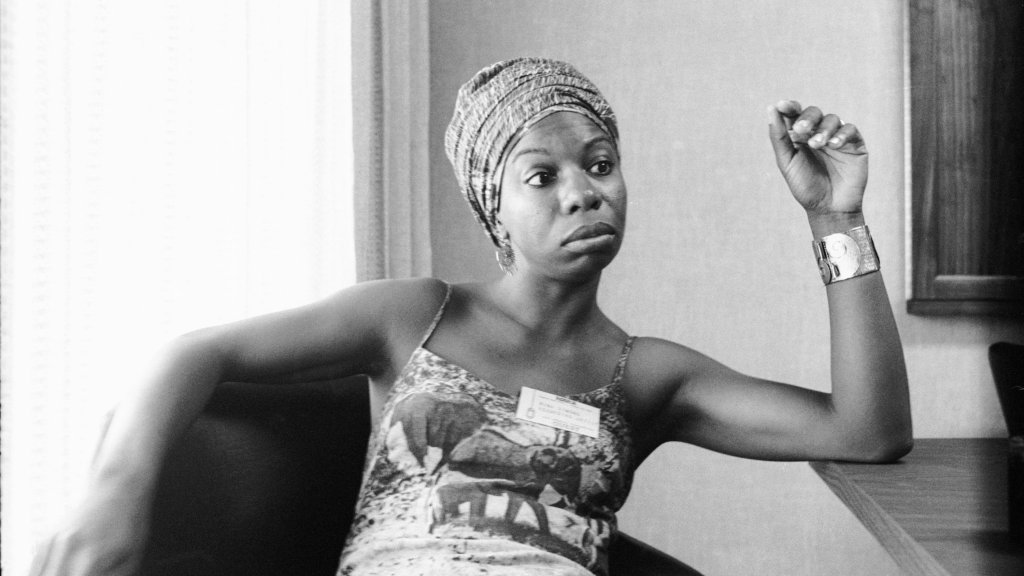
Born Eunice Kathleen Waymon in Tryon, North Carolina, Simone remains to this day, one of the most important voices belonging to blues, jazz, folk, R&B, gospel and even pop music.
Setting out to be a concert pianist at first, she then enrolled in the Juilliard School of Music — otherwise known as one of the most prestigious school of performing arts, located in New York City.
Fun Fact: her stage name was created to hide herself from her family members, when she first began playing piano at a nightclub in Atlantic City, for fear of being accused of playing “devil’s music” and “cocktail piano.” ‘Nina’ was derived from the Spanish word niña which means “girl,” a nickname given to her by an old boyfriend named Chico. Simone originated from the French actress Simone Signoret, whom the musician had seen in Casque D’Or, a 1952 movie.
Simone’s first single was a cover of American pianist, George Gershwin’s I Love You, Porgy — released in 1958. It was an instant success, earning her a spot on the Billboard top 20.
Her smooth vocals, a mixture of jazz, blues, and classical influences, were instantly coveted by a small albeit dedicated fanbase. She put out her debut album on February of the following year , titled “Little Girl Blue.”
Musically, her most popular songs (covered by numerous musicians throughout the years) are:
- Feeling Good (1965) — originally performed by Gilbert Price, written by Anthony Newley and Leslie Bricusse for their stage musical, The Roar of the Greasepaint, the Smell of the Crowd
- I Put a Spell on You (1964)
- Lilac Wine (1966) — originally written by James Shelton in 1950.
A powerhouse of vocals, Simone was also a force to reckoned with, and an outspoken person concerning Civil Rights. Her 1964 single, Mississippi Goddamn, was a response to the June 12, 1963 murder of Medgar Evers (American civil rights activist; NAACP’s — National Association for the Advancement of Colored People — first field secretary in Mississippi. He was assassinated by a white supremacist,) and the bombing of the 16th Street Baptist Church in Birmingham Alabama in September 15 of the same year — one that killed four black young girls, and partially blinded a fifth. The song was boycotted in some Southern states.
Her activism came with a price, however, as she was a staunch believer in violent revolution, as opposed to Martin Luther King Jr’s peaceful approach, Simone supported black nationalism. And as her activism rose, her music releases declined. But the songs were no less powerful and important when they were out.
In 1994, Simone and Weldon Irvine (composer, playwright, poet, pianist, organist, and keyboardist) turned Lorraine Hansberry’s (first African-American playwright to have a play on Broadway) unfinished To be Young, Gifted and Black into a beautiful song of empowerment, pride, and encouragement.
On this day, we honour Simone for many things. For starters, the smoothness of her deep voice — an ethereal voyage to jazz, blues, R&B, and classical heaven. For being so distinctive in her vocals, which led many listeners to do double takes once they realized it was a woman’s voice they were swaying to. And most importantly, we honour her integrity, strength, courage, and grit.
Happy birthday, Nina.
 Busybee's Playlist
Leave a comment